
US investigates payment services with bitcoin support: users complain about frozen accounts totaling $2.5 million
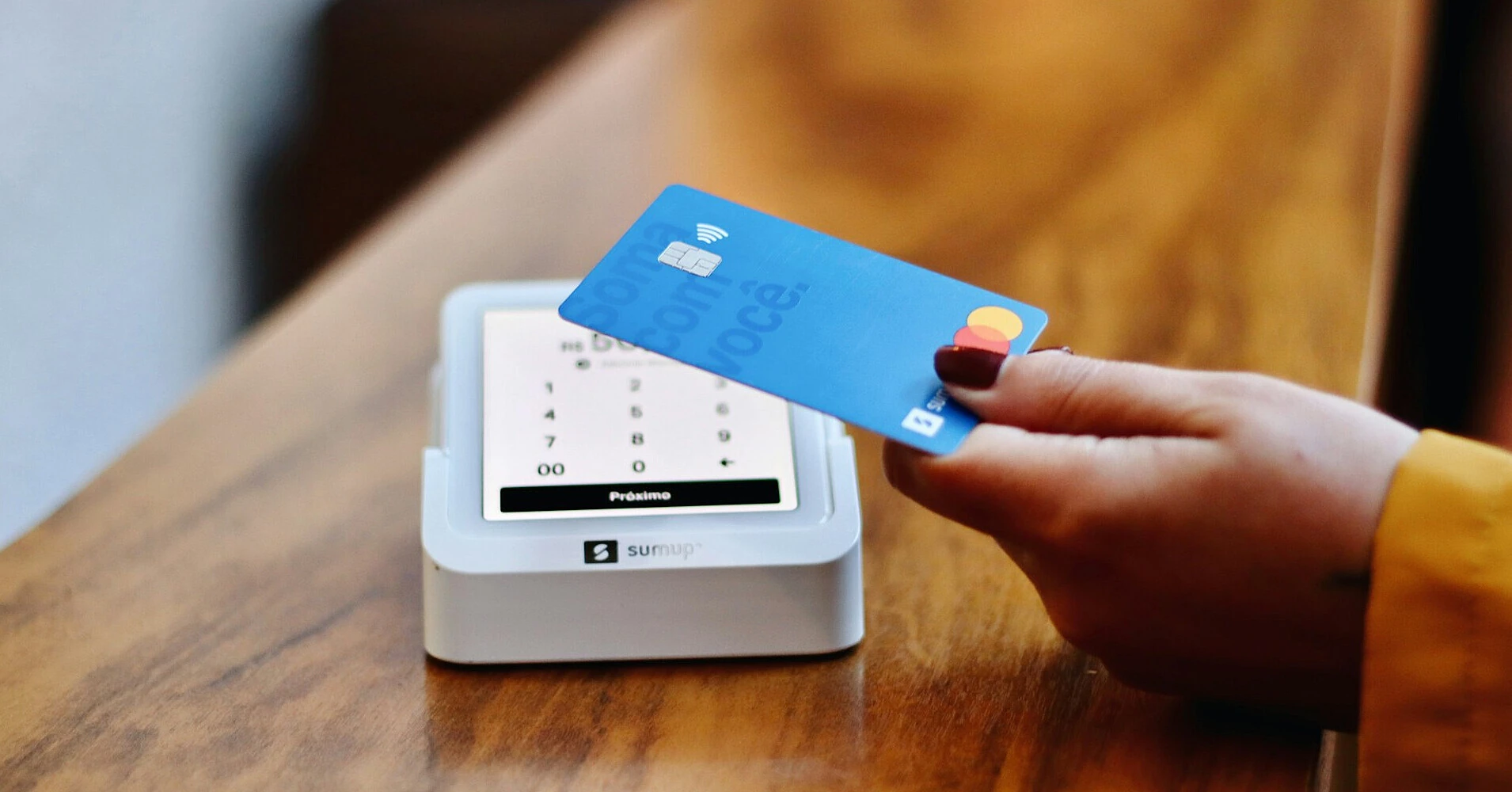
Imagine that through one app you send money to friends, pay with a card, and buy bitcoin, while through another your store or café accepts customer payments — including bitcoin settlements. Now the company that owns both services is being investigated by the American regulator after more than 1,500 consumer complaints.
The U.S. Federal Trade Commission (FTC) is investigating Block — Jack Dorsey's financial technology group, which owns Cash App and Square. The regulator wants to know whether customers received sufficient help when their accounts were frozen or fully disabled and access to money became impossible.
Case materials describe funds totaling up to about $2.5 million that were in blocked or deactivated Square accounts since 2022. This is not a court-determined amount of damages, but money appearing in the episodes considered by the regulator.
What are Cash App and Square and why the regulator became interested
Block may be little known to an ordinary user by name, but its services occupy a prominent place in the American payment system.
Cash App allows people to send and receive money, use a payment card, and buy, sell, and transfer bitcoin.
Square works primarily with businesses. Its terminals and software are used by stores, cafés, restaurants, and entrepreneurs to accept payments and manage sales.
And now this is not only ordinary card settlements. Through Square, American merchants can accept bitcoin via the Lightning network and choose to receive revenue in bitcoin or immediately convert it into dollars.
It turns out that one group simultaneously works with everyday transfers of ordinary people, payments of small businesses, and cryptocurrency.
Therefore, freezing an account here can mean much more than the inability to log into another app. For a private user, it may be about access to their own money, and for an entrepreneur — to business revenue.
Money remained in the account, but it was impossible to use it
The FTC investigation began in 2025. In January 2026, the commission demanded documents from Block after receiving more than 1,500 consumer complaints.
According to court materials, users claimed that the company froze or disabled accounts, after which they could not transfer the funds held there to their bank accounts.
In some cases, customers answered questions to verify identity and banking details, but according to the FTC, still did not receive sufficient help to resolve the problem.
Now the commission has petitioned a federal court to compel Block to provide the remaining documents.
The investigation itself does not yet mean that the company has been found to have violated the law.
Why payment services block accounts at all
The mere fact of temporary blocking of a financial account is not unusual.
Payment companies have to detect fraud, stolen credentials, suspicious transfers, and other operations that may violate rules or legislation.
Automated systems are increasingly used for this: a suspicious operation can be stopped almost instantly.
The problem starts if a legitimate customer gets caught in such a block, and there is no clear and quick way to reach a person and challenge the decision.
That is why the current investigation focuses not only on why accounts were restricted but also on what support people received after the block.
Amid this, the company cut more than 4,000 employees
The story has another important twist.
In February 2026, Block announced the reduction of more than 4,000 jobs — almost half of the company's staff.
Jack Dorsey directly linked the large-scale restructuring to the development of artificial intelligence (AI). According to him, new intelligent tools allow smaller teams to do more work.
The company is simultaneously expanding the use of AI within the business and creating its own automation tools.
FTC court documents separately mention these cuts in the context of the investigation into the quality of customer support.
However, this does not yet prove that the introduction of AI or layoffs caused the specific problems with frozen accounts. The regulator has yet to determine how support functioned and whether the company fulfilled its obligations to customers.
Questions about Cash App support arose before
For Block, this is not the first dispute with American authorities over what happens when a user of a financial app faces a problem.
In January 2025, the U.S. Consumer Financial Protection Bureau (CFPB) already found violations in Cash App's handling of fraud and unauthorized transfer complaints.
At that time, the regulator ordered the company to pay affected users up to $120 million in compensation and imposed a $55 million fine on Block.
One of the requirements was to improve customer support, including the ability to reach a live person 24/7.
The current FTC investigation is a separate process, but it again brings to the center the same practical question — how easily a person can regain control over their own money after a digital system has restricted their access.
What Block says
The company states that it is cooperating with the Federal Trade Commission and has already provided a significant portion of the requested information.
Block said it continues to work in good faith with FTC staff on the remaining requests and expects to bring this matter to a conclusion.
A significant part of the investigation materials remains closed, so the final scope of the regulator's claims is unknown.
Why this story matters beyond Cash App users
A few years ago, a payment app on a phone was mostly a convenient addition to a bank account. Now, through such services, people transfer and store money, pay with cards, invest, and work with cryptocurrency, while entrepreneurs accept daily revenue.
At the same time, financial companies are increasingly delegating transaction monitoring, fraud prevention, and some customer service to automated systems.
Here a contradiction arises: an algorithm can decide in seconds that an operation looks suspicious, but correcting an erroneous decision may require considerably more time.
The deeper such services enter everyday payments — from a bank card to bitcoin — the more important becomes a simple question: if a program instantly blocks a person's access to money, how quickly can they talk to a real person and get it back?
Based on materials from: Bloomberg Law, Square, Consumer Financial Protection Bureau, Reuters.
