
AI development now lacks more than chips: some key components are already sold out until 2029
The artificial intelligence boom has hit another shortage. After years of racing for processors, companies are now short of optical components that transmit data between thousands of accelerators inside massive data centers.
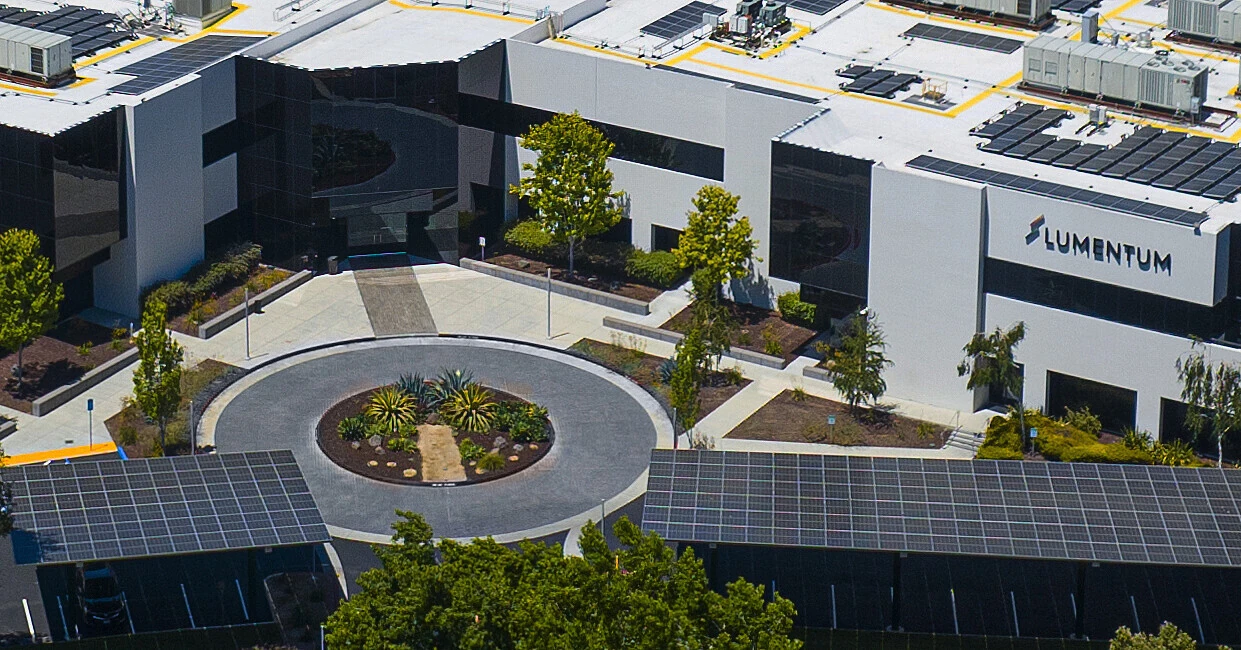
US-based Lumentum announced that its capacity for producing such components is effectively contracted out until early 2029. This is despite Nvidia investing about $2 billion in the company to help expand production.
For certain product lines the situation is even more acute: in 2027 Lumentum will only be able to meet about 30% of demand. Some customers are already trying to secure supply for 2030.
Why even the most powerful chips won't help without these parts
To the average user, optical components are almost invisible. But without them, thousands of expensive processors in a data center cannot exchange huge volumes of information quickly enough.
As artificial intelligence systems grow, the problem becomes increasingly complex. Modern computing clusters integrate a vast number of accelerators, which must constantly transfer data to each other.
Traditional electrical connections are starting to hit limits in speed, distance, and power consumption. Therefore optical technologies that transmit information using light are playing an ever larger role.
Lumentum produces lasers and other key components for such connections.
The queue stretches almost to the end of the decade
Lumentum CEO Michael Hurlston told Bloomberg that the company's available capacity is practically fully allocated until early 2029.
Only about six months ago, the company spoke about full production load until 2028. Now the horizon of the shortage has shifted further.
According to Hurlston, some customers are already discussing delivery for 2030.
The situation with individual products is particularly telling. In 2027, the company will be able to cover only about 30% of existing demand for some components. For other categories, capacity shortage will also persist in 2028.
Nvidia has already invested $2 billion — but demand is growing even faster
In 2026, Nvidia announced a strategic investment in Lumentum of about $2 billion.
The money is meant to help the manufacturer expand production of advanced optical components and increase manufacturing capacity in the US.
This is not an unrelated business for Nvidia. The more powerful its AI systems become, the more important are the technologies that connect individual processors and servers into a single computing complex.
However, the current backlog shows how fast the market is growing: even large investments in expanding production are not keeping pace with new orders.
The AI shortage keeps moving
Not long ago, the main constraint for the industry was considered to be the shortage of graphics processors. Then tech companies faced a shortage of high-speed memory, power grid limitations, and a lack of ready data centers.
Now components that most consumers have hardly heard of are becoming the bottleneck.
The reason is the same: AI infrastructure is being built so fast that demand is rising almost simultaneously for every link in the technology chain.
Even having the most expensive processors does not solve the problem if they cannot be connected fast enough.
Why the market reacted with a stock increase
After the announcement about capacity load, Lumentum shares rose about 7%.
For investors, the queue until 2029 means that the company already sees a significant part of future demand for its products.
But for buyers of these components, the same situation means the opposite: getting the necessary equipment could become another constraint when building new computing complexes.
Lumentum's story is therefore important far beyond one company. It shows that the AI race is no longer just about the best chips. Less visible parts, without which huge computing systems simply cannot be assembled, are becoming increasingly important.
And the horizon of the shortage is especially telling: companies are forced to reserve part of the infrastructure for the next generation of AI several years before they need it.
Based on materials from: Bloomberg.
